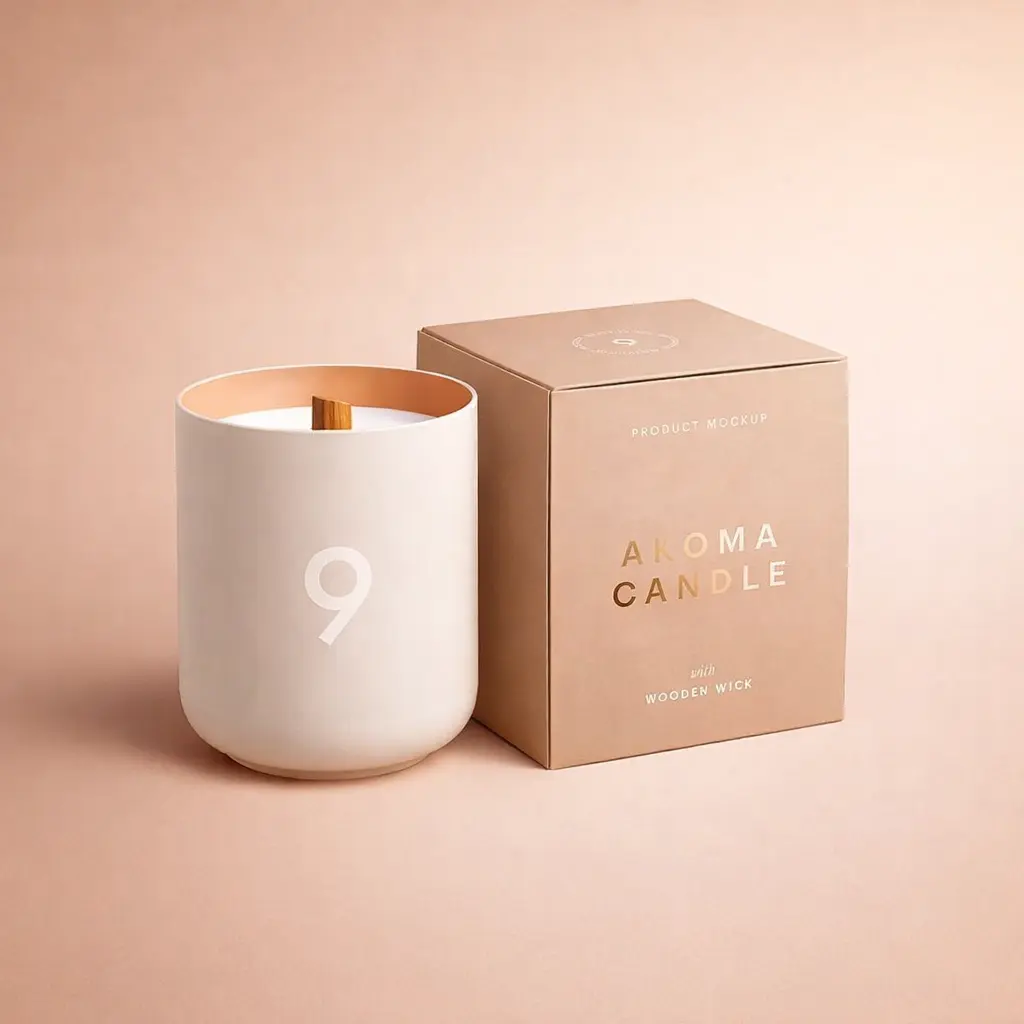
Your candle formula is dialed in. Your scent profiles are distinctive. Your labels look great. But when a customer picks up your candle for the first time, the packaging is what they touch, read, and react to before they ever lift the lid. Choosing the wrong packaging material, box style, or print finish can undercut everything else you have going for your brand.
This guide walks through the practical decisions candle makers face when sourcing custom packaging, from material selection to print finishes to minimum order quantities. Whether you are launching your first SKU or refreshing a line that has been running for years, the same framework applies.
Start With the Box’s Job
Before you pick a material or a color, ask what the packaging actually needs to accomplish.
A candle box might need to:
- Protect a fragile glass vessel during fulfillment and shipping
- Sit on a retail shelf and compete for attention at a distance
- Communicate premium positioning so a customer feels good about a $40 price point
- Serve as a gift box so the recipient does not need to rewrap it
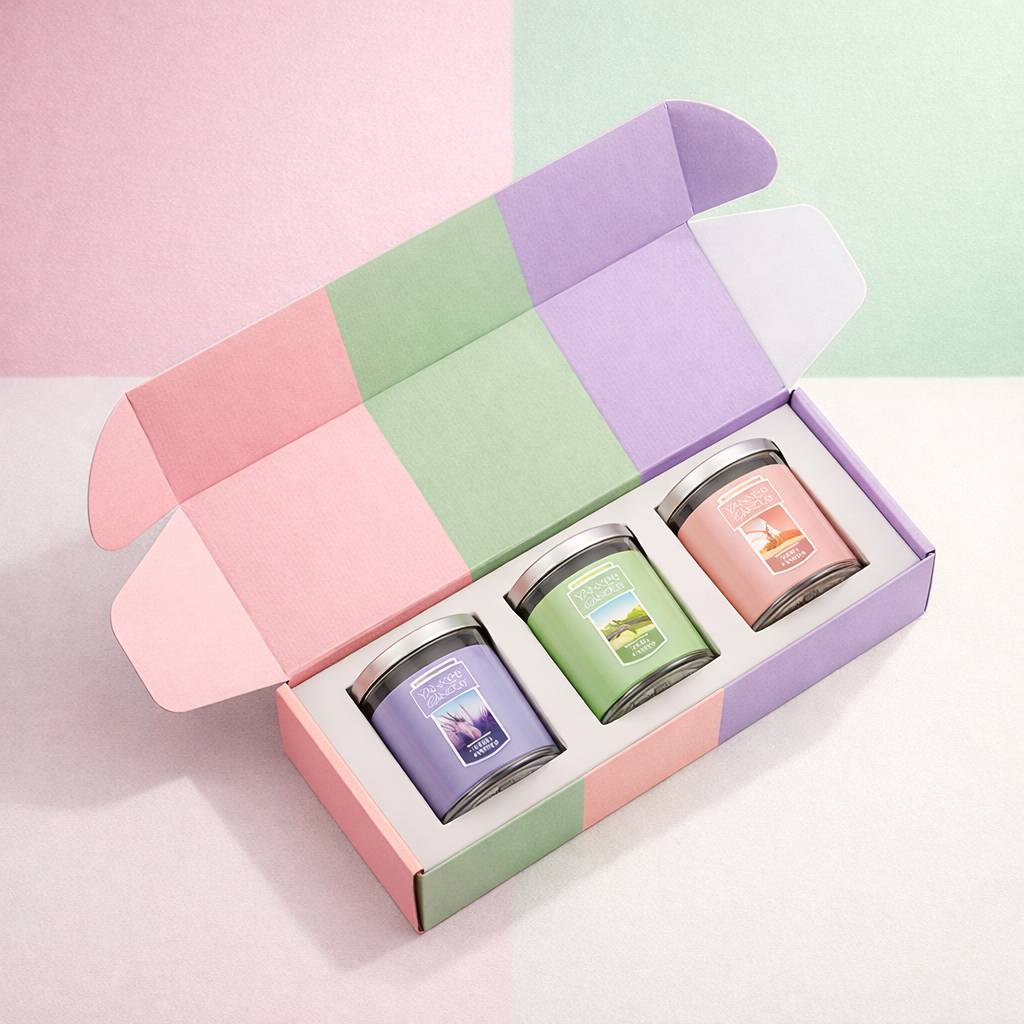
- Hold a set of three votives together for a subscription shipment
Most candle packaging has to do more than one of these things. A single-jar retail box is different from a shipping box for e-commerce. A gift set needs a completely different construction from a naked-shelf votive. Getting specific about the job first makes every downstream decision easier.
Understanding Candle Packaging Materials
The four materials you will encounter most often are kraft, cardboard, rigid board, and corrugated board. Each has trade-offs.
Kraft Paper and Kraft Board
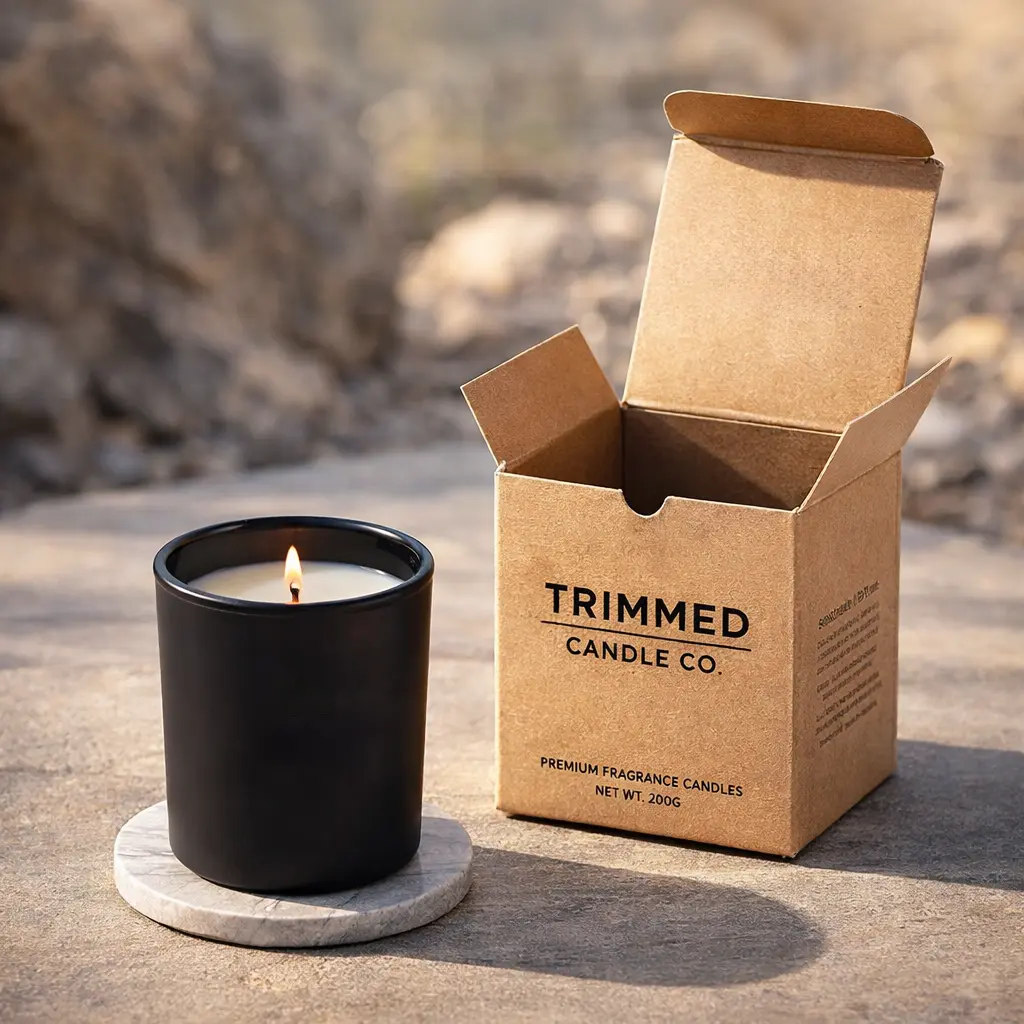
Kraft has a natural, uncoated look that reads as artisan and eco-conscious without any further effort. It takes printed designs well, though the brown base tint affects color representation, particularly for lighter tones. If your brand palette includes warm neutrals, earth tones, or muted greens, kraft is a natural match. Bright or saturated colors may need a white ink undercoat to stay accurate.
Kraft board is a solid choice for custom candle boxes on smaller jar and tin sizes where extreme structural rigidity is not critical. Our kraft candle boxes are popular with small-batch and artisan makers who want packaging that communicates craft without saying so explicitly.
Standard Cardboard (Coated Paperboard)
Coated cardboard is the most versatile substrate for candle packaging. It accepts full-color printing cleanly, holds sharp edges and fine detail, and can be finished with gloss lamination, matte lamination, soft-touch coating, spot UV, or foil stamping. This is the base material for most retail candle boxes you see in gift shops, boutiques, and department stores.
If you are building a brand that needs precise color matching across a product line, coated cardboard gives you the most predictable results. It is also the easiest substrate for complex structural work like drawer-style boxes, two-piece lid and base, and tuck-top closures.
Rigid Board
Rigid board, sometimes called setup board, is significantly thicker and heavier than standard cardboard. Luxury candle boxes built on rigid board feel substantial in a way that coated cardboard cannot replicate. The weight alone communicates quality when a customer picks one up.
Rigid board boxes are almost always wrapped in a printed paper or fabric-look sheet, which gives you flexibility in the finish. They are not folded flat at the manufacturing stage, which means higher per-unit shipping costs from the factory and higher storage volume. That said, for a $60 to $80 candle or a luxury gift set, the unboxing experience that rigid board enables is often worth it.
Rigid board is the right call when:
- Your price point is above $50 and the packaging needs to match
- The candle is positioned as a gift
- You are selling through premium retail channels where shelf presence matters
- You have a smaller SKU count where the higher unit cost is easier to absorb
Corrugated Board
Corrugated board, built from a fluted layer sandwiched between two flat liner sheets, is primarily a protective and shipping material. Candle shipping boxes and mailer boxes for e-commerce brands are almost always corrugated.
If you sell direct-to-consumer and ship individual candles, corrugated packaging often eliminates the need for an inner box plus a separate shipping carton. A printed corrugated mailer can serve as both the brand presentation layer and the shipping protection layer at the same time. Many subscription candle businesses use this approach.
Corrugated is not the right choice for open retail shelf display, but for DTC and subscription brands, it is genuinely versatile. Our candle subscription boxes are built on corrugated stock for exactly this reason.
Box Styles and Structural Choices
Material and structure are separate decisions. Here are the most common constructions for candle packaging.
Tuck-top auto-bottom (TTAB): The workhorse retail box. Glued bottom, folded top. Assembles quickly, holds shape on shelves, ships flat. Good for mid-range and value brands.
Reverse tuck-end (RTE): Top and bottom tucks fold from opposite sides. Slightly different unboxing feel. Common in candle gift packaging and cosmetic packaging.
Drawer style (sleeve and tray): A sleeve that slides off a rigid inner tray. Creates a deliberate, premium unboxing experience. Popular for candle gift sets and luxury candle boxes.
Two-piece lid and base: A rigid base and a separate lid that lifts off. Classic look for premium single candles. Requires thicker substrate to hold its shape without glue.
Mailer box: A corrugated construction with interlocking lid and base, no tape required. The standard format for subscription and DTC candle brands. Works especially well with candle display boxes designed for retail environments.
Window boxes: Any of the above structures with a clear window cut-out so the candle is visible inside the box. Useful for showing off unique vessel shapes or colors. Particularly popular for candle jar boxes where the vessel design is part of the brand appeal.
Print Finishes: What They Actually Do
Print finish decisions have a bigger impact on perceived quality than most brand owners realize. A well-chosen finish can make a moderate print look premium. A mismatched finish can make excellent print look cheap.
Gloss lamination: Bright, saturated colors. Reflects light. Durable against scuffs. Reads as bold and modern. Not the right choice if your brand is understated or minimalist.
Matte lamination: Flat, low-reflection surface. Colors appear softer. Fingerprints are more visible but less shiny. A premium, contemporary feel that works across a wide range of brand aesthetics.
Soft-touch (velvet) matte: A tactile matte finish that feels slightly rubbery under your fingertips. Extremely popular for luxury packaging. Adds cost but creates a memorable physical experience.
Spot UV: A glossy varnish applied to specific areas, typically a logo or pattern, over a matte base. Creates contrast between the matte background and the shiny element. Effective for highlighting brand marks without going full gloss.
Foil stamping: Metallic or colored foil applied under heat and pressure. Gold and silver foil are the most requested for candle packaging. Adds a craft feel that print alone cannot replicate. Best used selectively on logos or key text rather than as a background treatment.
Minimum Order Quantities
MOQ is one of the most common sticking points for candle brands in growth mode. There is a genuine tension between unit economics (which improve significantly at higher quantities) and cash flow and storage constraints (which push toward smaller orders).
A flexible starting point is 100 units per SKU. At that volume, you get access to custom dielines, custom print, and reasonable per-unit costs. It is a workable number for a new product launch, a seasonal variant, or a test of a new size.
As order quantities increase, per-unit costs decrease, primarily because setup and plate costs are amortized across more units. At 500 units, the math usually becomes significantly better. At 1,000 and above, you start accessing the best pricing tiers.
The practical recommendation: start at a quantity you can realistically sell through in one to two business cycles, then reorder at higher quantities once you have validated demand. Carrying 2,000 units of packaging for a product that moves 200 units per year ties up capital and storage that could work harder elsewhere in your business.
What to Ask Your Packaging Manufacturer
When you are evaluating manufacturers or requesting quotes, the following questions will tell you quickly whether you are talking to someone who actually knows candle packaging.
- What dieline formats do you work from, and can you provide a blank dieline for my box size?
- Do you provide digital proofs before production begins?
- What is your standard turnaround from order confirmation to shipping?
- What are your standard substrate and caliper options for the box style I am interested in?
- How do you handle reprints if there is a print defect?
- Do you offer physical samples for new orders?
A manufacturer who cannot answer questions 1 through 4 clearly is probably not set up to handle custom work well. A manufacturer who gives you specific, confident answers is one you can build a working relationship with.
Putting It Together
The best candle packaging decision is the one that serves your specific brand at your current stage. A craft candle brand selling at farmers markets has different packaging needs than a DTC brand scaling through Shopify. Both are valid, and both deserve packaging that fits.
If you know your material preference but are not sure about structure, start with the candle packaging product pages to see the range of box styles available and how each one performs for different use cases.
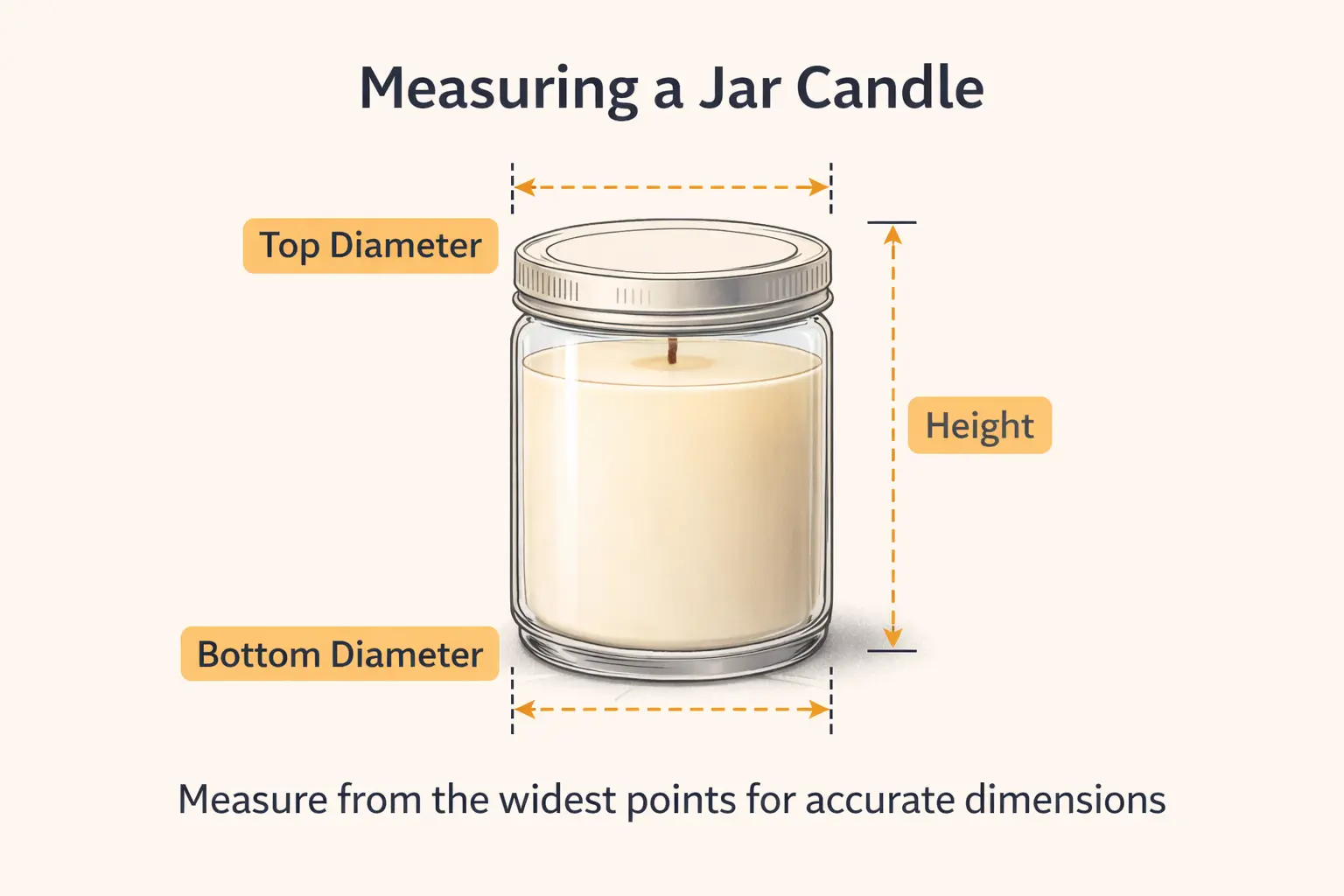
If you are ready to move forward with a custom quote, get in touch. Bring your dimensions, your quantity estimate, and any reference images, and we can put together options that fit what you are building.